Historically, one of many default purchases for individuals flush with money is an even bigger, better TV. That is smart on a few ranges. First, it is a conspicuous standing image, whether or not for the individuals round you or simply in your personal contentment while you stroll within the room. On a sensible degree, although, upgrading your TV will instantly enhance the expertise of what many people do for enjoyable: playing games or watching motion pictures and exhibits.
A notable development has emerged lately. Whereas there are nonetheless causes to splurge on an costly TV, the standard of mid-range and even some price range TVs has risen to the purpose that many individuals will really feel completely glad with them. I am not going to attempt to speak you out of shopping for a 75-inch OLED. should you’re bent on it — however given the components beneath, you could need to think about what else you may be placing that cash in the direction of.
Brightness and colour accuracy are stable
What in the end issues most
It was that should you purchased a price range TV, you have been taking a severe gamble on picture high quality. You may nonetheless be, however older price range LCDs have been extra prone to have weak lighting, making them onerous to look at in sunlit rooms, and fewer punchy general. Partly due to this, their colour illustration was off. Certainly it was inconceivable for them to show true blacks, since inferior backlighting methods turned shadows a darkish grey as an alternative.
You will nonetheless need OLED for one of the best distinction, however low cost LCDs are actually geared up with a number of backlight zones, permitting some sections of the display screen to dim far sufficient to make blacks look black when it counts. And I am unable to even keep in mind the final time I noticed an LCD that would not be brilliant sufficient for every little thing however direct daylight.
The true miracle is mini-LED. You will pay a bit of extra for it, however that tech shrinks backlights even additional, permitting some TVs to realize OLED-like distinction with out breaking the financial institution. Some lovers may very well desire mini-LED, because it’s able to getting far brighter than OLED with no danger of burn-in. The mini-LED TV in my own residence is so brilliant that it might be blinding if I cranked it as much as most.
Contributing to each brightness and colour accuracy is the unfold of quantum dot (QD) know-how. Regardless of the identify, there’s nothing particular occurring on the subatomic degree — as an alternative it refers to the usage of particular semiconductor crystals which emit totally different colours at totally different sizes. QLED and QD mini-LED units show a wider colour gamut, which may make photographs appear extra lifelike.
4K and dynamic HDR are all over the place
You may neglect about 8K

Whilst you’ll nonetheless discover loads of 1080p TVs on sale if you would like one thing underneath 40 inches, something above that tends to be at 4K decision, no matter its value. That is fairly important. At something however the largest display screen sizes, it is tough to identify jagged edges in 4K, and having extra pixels to work with permits for higher colour and distinction, notably in relation to HDR (excessive dynamic vary) content material.
You are little question conscious of 8K TVs, however they’re largely pointless in the meanwhile. The one dependable supply of 8K content material is YouTube, seemingly as a result of corporations like Netflix and Disney must massively scale up their storage and bandwidth. Only a few motion pictures have even been mastered in 8K. Virtually talking, it is tough to identify the distinction between 4K and 8K on a TV that may slot in a regular front room.
Crucially, the 2 primary dynamic HDR requirements — HDR10+ and Dolby Vision — have filttered right down to cheaper fashions. Static HDR codecs like HDR10 will be effective, however they apply the identical metadata all through a whole video, which dangers some scenes showing too brilliant, too darkish, or in any other case not as meant. Dynamic codecs can react per scene, and even per body, maintaining high quality extra constant inside content material and between totally different TVs.
Within the subsequent yr or so, Dolby Imaginative and prescient 2 ought to enhance the looks of price range TVs even additional by permitting studios to specify extra particulars about how their content material ought to seem. It is only a query of how shortly TV makers can get fashions out the door.
Gaming options are simpler to search out
Pay shut consideration to specs, although

As lately as a couple of years in the past, you needed to be very choosy should you have been selecting a TV for PC or console gaming. At a minimal, a gaming TV requires a Sport Mode that eliminates post-processing. These picture enhancements are redundant, and create noticeable enter lag, which may imply the distinction between beating a boss shortly or getting caught without end. I would not even dare to play one thing like Hole Knight: Silksong with out Sport Mode on.
Virtually as necessary are refresh charges. For a very long time, many TVs have been caught with 60Hz and even 30Hz panels. 60Hz is ok for motion pictures and TV exhibits, since framerates are unlikely to exceed 30fps. However some video games run at 60fps or increased, and as soon as there is a mismatch between refresh charges, you may run into visible artifacts like display screen tearing.
Fortunately, 120Hz TVs have gotten increasingly more inexpensive. Often included alongside that’s VRR, quick for variable refresh charge. That function syncs your TV’s refresh charge to your gaming gadget, guaranteeing that visible glitches won’t ever seem.
It is nonetheless value listening to specs, thoughts you. Some TV makers attempt to faux excessive refresh charges, counting the results of movement smoothing/interpolation on what’s truly a 60Hz panel. Insist on native 120Hz help — movement smoothing will probably be off while you’re in Sport Mode anyway.
Measurement would not price that a lot
How large does a TV actually have to be?

My first good TV — the primary TV I purchased by myself, in reality — was a 40-inch Sharp LCD. It felt enormous, particularly since TVs have been thicker and heavier on the time. Attempting to hold it up three flights of stairs in Texas summer time warmth was a problem. It wasn’t low cost, both. Whereas I received on low cost, it might’ve price $1,200 at MSRP.
In 2026, it is easy to discover a 65-inch TV for $400, and a few 55-inch units are underneath the $300 mark. Many 75-inch TVs are $700 or much less, which is sort of onerous to consider should you’re sufficiently old to recollect how small TVs within the ’80s or ’90s have been.
Within the common front room, something over 75 inches tends to be not only a luxurious, however counterproductive.
Within the common front room, something over 75 inches tends to be not only a luxurious, however counterproductive. It may be tempting to purchase an 85- or 100-inch TV just because you may — however should you’re sitting lower than 10 toes (3 meters) away, your eyes might find yourself always darting round to soak up photographs. That is going to be irritating in the long term, particularly throughout epics just like the Lord of the Rings trilogy.
With dimension much less of a priority, you may prioritize a few of the different specs I’ve highlighted on this piece. I do know I might a lot somewhat personal a 65-inch mini-LED TV with VRR than a 100-inch fundamental LCD that tops out at 60Hz.
Trending Merchandise

Wi-fi Keyboard and Mouse, Ergonomic...

Sceptre Curved 24.5-inch Gaming Mon...
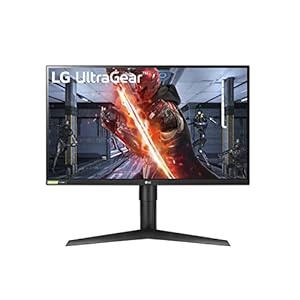
LG UltraGear QHD 27-Inch Gaming Mon...

Acer KB272 EBI 27″ IPS Full H...
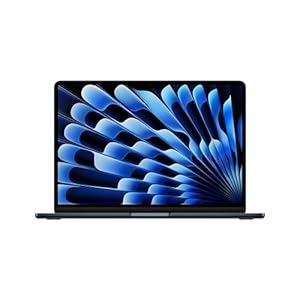
Apple 2024 MacBook Air 13-inch Lapt...

Cooler Grasp Q300L V2 Micro-ATX Tow...

ASUS TUF Gaming 27″ 1080P Mon...
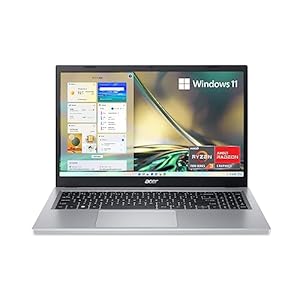
Acer Aspire 3 A315-24P-R7VH Slim La...

Logitech Signature MK650 Combo for ...